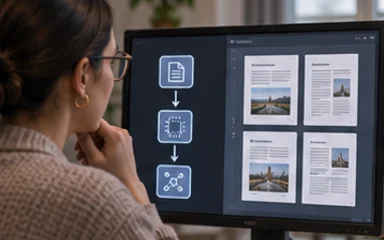
Draft programme preview. The course content is under review. Dates, fees, venue, seats, trainer assignment and any HRD Corp eligibility must be confirmed separately.

Artificial Intelligence · Programme preview

Agentic AI from Scratch: In-Depth RAG, MCP, Human-in-the-Loop, and Multi-Agent Systems

LangChain and LangGraph with state, parallel execution and human-in-the-loop workflows.

Suggested audience, preparation and outcome summaries below are based on the syllabus and await trainer review. They are guidance, not confirmed admission requirements or additional inclusions.

Artificial intelligence application development environment
Duration
5 days
Who it fits
Python developers who want deeper control of agent workflows
Programme reference
To be confirmed — draft programme

Suggested learning outcomes

  • Build LangChain tool-using and retrieval-augmented workflows.
  • Model agent execution with LangGraph state and routing.
  • Use checkpointing, summarisation and subgraphs.
  • Coordinate parallel workers and supervisor-led specialist agents.
  • Apply evaluator–optimizer loops and human approval interrupts.

Practical activities in the outline

Module 1: Understanding Generative AI and Agents

Lab 1.1: Creating a chatbot using OpenAI API and Streamlit/Gradio

Exercise listed in the outline

Module 5: Model Context Protocol (MCP)

Lab 5.1: Creating a custom MCP server

Exercise listed in the outline

Module 10: Interrupts and Human-in-the-Loop

Lab 10.1: Human-in-the-loop interrupts for approval and review

Exercise listed in the outline

The exercises below are drawn from the supplied outline. Confirm the lab environment and what resources are included for your delivery.

Get the course outlineReview the syllabus and prerequisites

Request Course Outline

Agentic AI from Scratch: In-Depth RAG, MCP, Human-in-the-Loop, and Multi-Agent Systems

Your course details are prefilled in the form. This is an outline request, not a seat reservation. Automated outline email delivery is still being tested.

Open form in a new tab

Your course learning plan

Day 1 – Generative AI Foundations & LangChain Basics

Module 1: Understanding Generative AI and Agents
  • What is Generative AI?
  • What are LLMs (Large Language Models)
  • Introduction to OpenAI API and ChatGPT
  • Using ChatGPT for various tasks using manual prompting
  • What kind of applications can be developed using these LLMs
  • Understanding ReAct prompt
  • Understanding Agent and how it works conceptually
  • Understanding about embeddings and RAG Conceptually
  • Discussion on Various cloud offerings like Azure OpenAI, Google Vertex AI and Amazon Bedrock
  • Lab 1.1: Creating a chatbot using OpenAI API and Streamlit/Gradio
Module 2: Using LangChain 1.x
  • Why LangChain?
  • Using LangChain to make API call to OpenAI API
  • Understanding various message types
  • Understanding and creating a first chain
  • Understanding and using Prompt Templates
  • Understanding Runnables in detail
  • Chaining 2 chains
  • LCEL (LangChain Expression Language)
  • Lab 2.1: Creating a chatbot using LangChain and Streamlit
  • Lab 2.2: Using Runnables for chain composition and advanced workflows

Day 2 – Tools, Agents & Advanced Workflows

Module 3: Understanding Tools and Agents
  • Understanding how agents work
  • Creating tools and creating agent using tools
  • Understanding Middleware
  • Using @wrap_model_call, @wrap_tool_call and @dynamic_prompt
  • Static and Dynamic Models
  • Error Handling In Tools using middleware
  • Static and dynamic prompts
  • Structured output using Tool Strategy and Provider Strategy
  • Understanding Memory
  • Memory Management Techniques like Trimming Messages, Message Summarization
  • Using DatabaseToolkit and Code execution tools
  • Agent response streaming
  • Using Tool Runtime to access State, context, Store Commands and Stream Writer
  • Mail Agent and Human In the Loop
  • Implementing Guard rails
  • Lab 3.1: Using Middlewares for custom functionality and error handling
  • Lab 3.2: Dynamic models and Dynamic Prompts implementation
  • Lab 3.3: Building a Database Agent using DatabaseToolkit
  • Lab 3.4: Human In the Loop implementation with Gmail integration
  • Lab 3.5: Implementing Guard rails for agent safety and compliance
  • Lab 3.6: Agent response streaming for real-time interactions
  • Lab 3.7: Using Tool Runtime for state management and context access
  • Lab 3.8: Memory Management - Trimming messages and summarization

Day 3 – RAG Systems & MCP Integration

Module 4: Understanding Embeddings, Vector Store and RAG
  • Understanding embeddings
  • What is RAG?
  • Using Document Loaders, Splitters
  • Indexing
  • Using Chroma DB as vector store
  • Understanding Similarity Search
  • Retrieving using retrievers
  • RAG with Agents
  • RAG with Chains
  • Lab 4.1: Implementing a complete RAG system with document processing, vector store (Chroma DB), similarity search, and retrieval
  • Lab 4.2: RAG with Agents - Building an intelligent agent with RAG capabilities
  • Lab 4.3: RAG with Chains - Creating complex RAG workflows using chains
Module 5: Model Context Protocol (MCP)
  • Why MCP?
  • Creating a custom MCP server
  • Using MCP Servers with Claude desktop
  • Stdio Client
  • SSE client
  • Using MCP with LangChain
  • Lab 5.1: Creating a custom MCP server
  • Lab 5.2: Integrating MCP with Claude Desktop
  • Lab 5.3: Using Stdio and SSE clients for MCP communication
  • Lab 5.4: Using MCP with LangChain applications

Day 4 – LangGraph Foundations & Stateful Chatbots

Module 6: LangGraph Foundations & Stateful Graph Execution
  • Why LangGraph when you already have LangChain
  • Thinking in graphs: nodes, edges, state, and control flow
  • Defining the application state and state schema
  • Creating your first StateGraph and adding nodes/edges
  • Entry points, end nodes, and routing logic
  • Streaming graph execution
  • Using Message-Based State with annotated lists
  • Using add_messages for better message management
  • Adding conditional logic and tool calling
  • Implementing a graph which simulates the agent used in LangChain
  • Understanding and using checkpointing
  • Inspecting graph state
  • Multiple schemas and private state
  • Lab 6.1: LangGraph Basics – Build and run your first StateGraph with message-based state
  • Lab 6.2: Implementing a LangChain-style ReAct agent as a LangGraph workflow with tools and conditional routing
  • Lab 6.3: Using checkpointing and state inspection to debug and replay graph executions
Module 7: Message Summarization and Subgraphs
  • Message summarization for long conversations
  • State design with messages and a running summary
  • Summarization node and conditional routing
  • Checkpointing and conversation persistence
  • Compiling a graph and using it as a subgraph
  • State sharing between a parent graph and a subgraph
  • Lab 7.1: Chatbot with message summarization and checkpointing
  • Lab 7.2: Composing the summarization graph as a subgraph

Day 5 – Parallelization, Multi-Agent Patterns & Advanced Design

Module 8: Parallelization and Dynamic Fan-Out
  • Fan-out and fan-in execution
  • Reducers for concurrent state updates
  • Dynamic fan-out with the Send API
  • Orchestrator–worker coordination
  • Aggregating results from parallel branches
  • Lab 8.1: Parallel branches with reducers
  • Lab 8.2: Dynamic fan-out with Send and an orchestrator–worker graph
Module 9: Supervisor Pattern and Evaluator–Optimizer Loops
  • Specialist agents and shared state
  • LLM supervisor for routing and completion
  • Communication between supervisor and workers
  • Evaluator–optimizer loops
  • Structured evaluation and iterative refinement
  • Lab 9.1: Multi-agent workflow with an LLM supervisor
  • Lab 9.2: Evaluator–optimizer loop for iterative refinement
Module 10: Interrupts and Human-in-the-Loop
  • Interrupts in LangGraph
  • Pausing and resuming graph execution
  • Human-in-the-loop approval
  • Review and edit before continuation
  • Checkpointing across interrupts
  • Lab 10.1: Human-in-the-loop interrupts for approval and review
Optional: Additional Multi-Agent Patterns If time remains
  • Handoff (swarm) pattern
  • Planner–executor pattern
  • Debate and judge pattern
  • Voting ensemble pattern
  • Hierarchical routing
  • Selecting a pattern for a coordination problem
  • Lab: Pattern overview, then any of the following as time permits
  • Handoff between specialist desks
  • Planner–executor on an incomplete case file
  • Debate and judge for a contested decision
  • Voting ensemble with independent reviewers
  • Hierarchical routing across teams

Additional multi-agent patterns are optional and taught only if time permits.

Need a public-facing course outline? Request it from Timmins.

Is this course right for you?

Who should attend

  • Python developers who want deeper control of agent workflows
  • AI engineers and solution architects working on multi-agent systems

Before you join

  • Be comfortable with Python and basic package/virtual-environment workflows.
  • Review JSON and API concepts. From Scratch refers to the agent frameworks, not to learning programming from zero.

Suggested starting knowledge is intended to help you prepare. Discuss your experience with Timmins; final entry requirements and delivery arrangements must be confirmed.

Tools and learning support

Prepare a Python development environment, editor and approved model API access. Confirm compatible LangChain/LangGraph packages and download permissions. Additional multi-agent patterns remain optional if time permits.

Ask which preparation materials, follow-up resources or trainer support are included in your selected delivery.

Certificate and assessment

Confirm the certificate, completion requirements and any assessed activities for your selected batch. A practical project does not by itself establish an assessed skills award.

Understand certificates and assessments →

Public classes and booking

Confirm dates, venue, fees, available seats and delivery arrangements with Timmins before booking.

Ask Timmins about upcoming dates for this course.

View the public training calendar →

No suitable date?

Ask about another date or team delivery. Share your preferred timeframe, city or delivery mode and participant numbers. Timmins will discuss the options; dates, trainer availability, delivery and fees must be confirmed separately. Sending an enquiry does not reserve a place or confirm a class.

Your selected course is included in the draft. Review it and press Send in your messaging app.

Frequently asked questions

Does From Scratch mean I can join without programming knowledge?

No. The original outline asks for comfort with Python. It develops the framework foundations during the workshop; discuss preparation with Timmins if Python is new to you.

Who is this programme suitable for?

Suggested audience: Python developers who want deeper control of agent workflows; AI engineers and solution architects working on multi-agent systems. These role descriptions await trainer review; discuss your experience and goals with Timmins.

What should I prepare?

Be comfortable with Python and basic package/virtual-environment workflows. Review JSON and API concepts. From Scratch refers to the agent frameworks, not to learning programming from zero. Prepare a Python development environment, editor and approved model API access. Confirm compatible LangChain/LangGraph packages and download permissions. Additional multi-agent patterns remain optional if time permits.

Are dates, fees and places confirmed?

No public class dates or places are confirmed on this draft programme page. Ask Timmins about delivery options, fees and availability. An enquiry does not reserve a seat.

Can you use an example from our workplace?

Share a non-confidential description of your challenge. Timmins will review whether relevant examples fit the approved scope and duration. Inclusion is subject to feasibility and trainer review and is not guaranteed.

What certificate, assessment or follow-up is included?

These arrangements have not been confirmed on this draft page. Ask Timmins about the certificate, completion conditions, any assessed activities and follow-up for your selected delivery.

Discuss the right training scope for your team.

Discuss Team Training
Chat on WhatsApp