Spring Boot and service foundations
Set up a Spring Boot application and examine how configuration, REST endpoints and Spring Data fit together.
Explore the course learning plan Training & Capability DevelopmentLearn. Practise. Apply.⌕
Developing enterprise applications using Spring.
The course begins with an introduction to Spring, covering its evolution, modules, and dependency injection mechanism.
Set up a Spring Boot application and examine how configuration, REST endpoints and Spring Data fit together.
Explore the course learning planExamine how services find and call one another as instances are added or removed.
Explore the course learning planConsider what happens when one service is slow or unavailable and review how a circuit breaker can limit the effect on other parts of the application.
Explore the course learning planSet up a Spring Boot application and examine how configuration, REST endpoints and Spring Data fit together. Work with common repository and database operations, and review how Spring Security supports identity and access decisions. The section establishes the design of an individual service before connecting it to other services. Connect the foundational ideas to the examples in the section, distinguishing the responsibility of each component before considering how they work together in a system.
Examine how services find and call one another as instances are added or removed. Review declarative clients, service discovery and client-side load balancing in the framework versions covered by the outline. Discuss how those components influence where developers put configuration and how they reason about communication failures. Consider how the choice of words, listening and response changes the exchange, keeping the other person’s perspective and the purpose of the conversation in view.
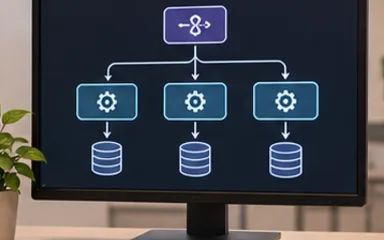
Consider what happens when one service is slow or unavailable and review how a circuit breaker can limit the effect on other parts of the application. Study how an API gateway routes requests across services. The focus is on recognising the role of each component in a distributed application. Follow the request or message between components, distinguishing the information exchanged, the responsibilities at each boundary and the result expected by the caller.
The published outline groups these topics by module, session or combined days. The sections cover the 5 days programme; confirm the final day-by-day timetable with Timmins.
Need the detailed syllabus? Request the course outline.
Check the course fit for your role and experience. Confirm the prerequisites, delivery scope and preparation before booking.
Check the full outline for this course’s tools and technologies. Confirm software versions, licences, accounts, equipment, access and installation requirements before joining.
Ask which preparation materials, follow-up resources or trainer support are included in your selected delivery.
Confirm the certificate, completion requirements and any assessed activities for your selected batch. A practical project does not by itself establish an assessed skills award.
Understand certificates and assessments →Confirm dates, venue, fees, available seats and delivery arrangements with Timmins before booking.
Ask Timmins about upcoming dates for this course.
View the public training calendar →Ask about another date or team delivery. Share your preferred timeframe, city or delivery mode and participant numbers. Timmins will discuss the options; dates, trainer availability, delivery and fees must be confirmed separately. Sending an enquiry does not reserve a place or confirm a class.
Your selected course is included in the draft. Review it and press Send in your messaging app.
Share your role, experience and intended workplace application with Timmins to confirm whether this course is suitable.
Good knowledge of Java Programming. Understanding of Web technologies is a must.
Check the full outline for this course’s tools and technologies. Confirm software versions, licences, accounts, equipment, access and installation requirements before joining.
The learning plan describes the course topics and activities in the published summary. Ask Timmins to confirm the exercises, trainer feedback and any assessed activities for your selected delivery. Completion and assessed credentials have different requirements.
AI-assisted activities are not listed in this course summary. Ask Timmins to confirm the scope of your selected delivery rather than assuming AI tools are included.
Discuss an in-house programme with Timmins. Share the team’s roles, starting knowledge and workplace challenges. Agree any adaptations, assessment and follow-up support in the proposal.