Processes, tasks and context switching
Examine how an operating system represents work and changes which task or thread runs.
See the detailed course outline Training & Capability DevelopmentLearn. Practise. Apply.⌕
Explain task and thread lifecycles.
Learn how operating systems schedule tasks, manage shared resources and let processes communicate. Apply those concepts to systems that need to multitask.
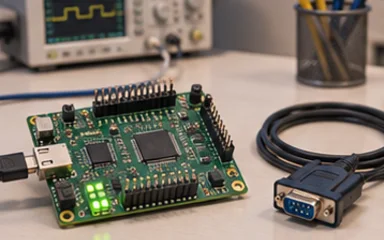
Examine how an operating system represents work and changes which task or thread runs.
See the detailed course outlineCompare scheduling approaches and review how memory and system resources are managed across workloads.
See the detailed course outlineChoose ways to coordinate concurrent work and exchange information across task or process boundaries.
See the detailed course outlineReview why operating systems are used, the tasks they perform and the criteria for choosing an operating system type. Introduce processes, process control information, creation and termination, including waiting for child processes. Examine zombie and orphan behaviour in the context of process management. The day establishes the system responsibilities and lifecycle concepts that support later discussions of tasks, scheduling, memory and communication.
Trace the task lifecycle, including creation, deletion, the endless loop pattern and task priorities. Examine the idle task and hooks before reviewing task context, saving and restoration. Explore switching between tasks and the relationship between tasks and interrupts. The day connects task design choices with the execution state that the operating system must preserve when moving from one unit of work to another.
Compare preemptive and nonpreemptive scheduling, round robin and priority based policies, including deadline and rate based approaches from the outline. Relate priority decisions to timing expectations before reviewing memory management in Linux and FreeRTOS. Examine code, data, stack and heap regions and the effects of caches. Participants connect scheduling and memory organisation with the constraints encountered when several tasks share an embedded system.
Examine why concurrency control is needed and compare atomic operations, mutexes and semaphores. Review deadlock, livelock, starvation and other consequences of unsuitable synchronisation choices. Continue into waiting, wakeup, events, mailboxes, queues and task notifications. The day connects shared resource protection with communication between tasks, helping participants distinguish coordination mechanisms from the data exchange and event signalling required by the application.
Compare pipes, FIFOs, message queues, shared memory and process semaphores for Linux IPC. The outlined activities revisit task and process creation, scheduling, memory layout, concurrency and communication using Linux and FreeRTOS. Exercises include producer and consumer coordination and priority inversion or inheritance. Participants connect the week’s mechanisms through practical examples and consider which approach fits a given communication or resource management requirement.
Need the detailed syllabus? Request the course outline.
Check prerequisites and confirm the course fit with Timmins for your role, experience and selected delivery.
Check the course outline for the software, development environment and any target hardware. Confirm installation steps, versions, equipment access and lab arrangements before joining.
Ask which preparation materials, follow-up resources or trainer support are included in your selected delivery.
Confirm the certificate, completion requirements and any assessed activities for your selected batch. A practical project does not by itself establish an assessed skills award.
Understand certificates and assessments →Confirm dates, venue, fees, available seats and delivery arrangements with Timmins before booking.
Ask Timmins about upcoming dates for this course.
View the public training calendar →Ask about another date or team delivery. Share your preferred timeframe, city or delivery mode and participant numbers. Timmins will discuss the options; dates, trainer availability, delivery and fees must be confirmed separately. Sending an enquiry does not reserve a place or confirm a class.
Your selected course is included in the draft. Review it and press Send in your messaging app.
Embedded software developers learning how operating systems coordinate concurrent work.
Knowledge of C programming.
Check the outline and confirm the software environment, hardware, equipment access and setup requirements for your selected delivery. Do not assume all courses use the same board or lab environment.
The course topics describe the technical scope. Ask Timmins to confirm the labs, demonstrations and any assessed activities for your selected programme. Completion and assessed credentials have different requirements.
Discuss an in-house session with Timmins. Share the team’s roles, systems and intended outcomes so the scope, prerequisites, delivery and any adaptations can be agreed.