Introduction to Microservices and Spring Boot
Explore Module 1: introduction to microservices architecture, Monolithic vs.
Explore the course learning plan Training & Capability DevelopmentLearn. Practise. Apply.⌕
Build microservices applications using Spring Boot and Spring Cloud.
Participants will learn how to design, build, and deploy scalable and resilient microservices-based applications.
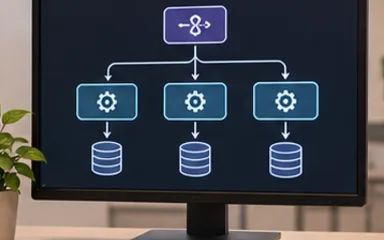
Explore Module 1: introduction to microservices architecture, Monolithic vs.
Explore the course learning planExplore Module 6: service discovery with eureka, service discovery, and Registering services with eureka server.
Explore the course learning planExplore Module 11: monitoring microservices with actuator and prometheus, Spring boot actuator for monitoring, and Exposing metrics with Actuator.
Explore the course learning planExplore Module 1: introduction to microservices architecture, Monolithic vs. microservices architecture, and Benefits and Challenges of Microservices. The discussion covers domain-Driven design for microservices, Module 2: getting started with spring boot, and Spring boot. The section also examines creating a RESTful service using spring boot, Dependency injection and spring boot annotations, and Microservices project setup.
Explore Module 4: Inter-Service communication, RESTful communication between services, and Synchronous vs. Asynchronous communication. The discussion covers using feign for declarative REST clients, Implementing circuit breakers with Resilience4j, and Module 5: centralized configuration with spring cloud config. The section also examines Spring cloud config, Externalizing configuration with config server, and Managing environment-specific properties.
Explore Module 6: service discovery with eureka, service discovery, and Registering services with eureka server. The discussion covers Configuring eureka clients, High availability and replication with Eureka, and Module 7: Client-Side load balancing with ribbon. The section also examines load balancing, Integrating ribbon with spring cloud, and Configuring load balancing rules.
Explore Module 9: API gateway with spring cloud zuul, API Gateway, and Configuring spring cloud zuul. The discussion covers Routing and filtering with Zuul, Securing API Gateway, and Module 10: distributed tracing with spring cloud sleuth and zipkin. The section also examines distributed tracing, Adding spring cloud sleuth for tracing, and Integrating with Zipkin for distributed tracing.
Explore Module 11: monitoring microservices with actuator and prometheus, Spring boot actuator for monitoring, and Exposing metrics with Actuator. The discussion covers Monitoring with Prometheus, Visualizing metrics with Grafana, and Module 12: dockerizing microservices. The section also examines Docker and containerization, Dockerizing spring boot microservices, and Docker compose for microservices orchestration.
Need the detailed syllabus? Request the course outline.
Check the course fit for your role and experience. Confirm the prerequisites, delivery scope and preparation before booking.
Check the full outline for this course’s tools and technologies. Confirm software versions, licences, accounts, equipment, access and installation requirements before joining.
Ask which preparation materials, follow-up resources or trainer support are included in your selected delivery.
Confirm the certificate, completion requirements and any assessed activities for your selected batch. A practical project does not by itself establish an assessed skills award.
Understand certificates and assessments →Confirm dates, venue, fees, available seats and delivery arrangements with Timmins before booking.
Ask Timmins about upcoming dates for this course.
View the public training calendar →Ask about another date or team delivery. Share your preferred timeframe, city or delivery mode and participant numbers. Timmins will discuss the options; dates, trainer availability, delivery and fees must be confirmed separately. Sending an enquiry does not reserve a place or confirm a class.
Your selected course is included in the draft. Review it and press Send in your messaging app.
Software developers and architects interested in learning microservices using Spring Boot and Spring Cloud and Individuals with prior experience in Java development.
Basic knowledge of Java programming. Familiarity with Spring Framework (Spring Boot experience preferred). Understanding of RESTful Web Services.
Check the full outline for this course’s tools and technologies. Confirm software versions, licences, accounts, equipment, access and installation requirements before joining.
The learning plan describes the course topics and activities in the published summary. Ask Timmins to confirm the exercises, trainer feedback and any assessed activities for your selected delivery. Completion and assessed credentials have different requirements.
AI-assisted activities are not listed in this course summary. Ask Timmins to confirm the scope of your selected delivery rather than assuming AI tools are included.
Discuss an in-house programme with Timmins. Share the team’s roles, starting knowledge and workplace challenges. Agree any adaptations, assessment and follow-up support in the proposal.