I2C controller and client communication
Work with controller-level I2C transfers and an EEPROM example to see how client devices exchange data.
See the detailed course outline Training & Capability DevelopmentLearn. Practise. Apply.⌕
Implement I2C and SPI transfers at controller level.
Develop I2C and SPI drivers from controller registers to Linux framework integration. Connect controller and client drivers using the Linux device model and Device Tree.
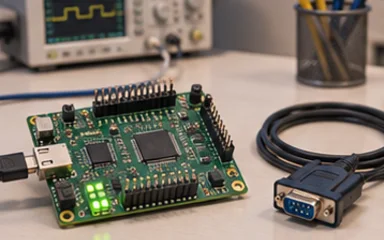
Work with controller-level I2C transfers and an EEPROM example to see how client devices exchange data.
See the detailed course outlineUse platform drivers, Device Tree and interrupts to integrate I2C support with the Linux framework.
See the detailed course outlineImplement SPI transfers and examine how controller and client drivers connect through the SPI framework, including where DMA fits.
See the detailed course outlineReview I2C communication and the target SoC registers before writing a controller driver independently of the Linux framework. Begin with a single byte transfer and extend the implementation to multiple bytes. Practical exercises connect the controller to an EEPROM for read and write operations. The day establishes observable low level transfers that can later be connected to adapters, clients and hardware descriptions in the Linux driver model.
Explore the Linux device model and its handling of hardware that is not automatically enumerable. Develop a platform device and driver, then introduce Device Tree representation. Examine I2C adapters, algorithms and clients, including registration and probing. Dummy adapter and client exercises help separate framework responsibilities from hardware access, establishing the structures that will be used to integrate the controller implementation with a real client device.
Integrate the platform specific controller and EEPROM client with the I2C framework, including suitable Device Tree entries. Examine why interrupts and hardware FIFOs are needed and how handlers interact with deferred processing. The exercises combine ISR and bottom half behaviour with the earlier driver components. Participants connect a completed bus transaction path with the event handling needed when communication is driven by hardware notifications.
Review SPI communication and create a character driver framework for a low level implementation. Examine the AM335x controller registers and transfer sequence, then build a loopback example. Introduce the Linux SPI framework, registration, probing and Device Tree entries. Dummy client and controller exercises connect those framework roles to the low level driver and demonstrate how hardware description supports discovery and binding.
Integrate the platform specific SPI controller and client, add the appropriate Device Tree entries and test the resulting driver. Review DMA controllers, transfer types and Linux DMA Engine APIs before extending the SPI implementation to use DMA. The day connects framework integration with an alternative method of moving data, requiring participants to relate setup, transfer steps and driver behaviour to the target platform.
Need the detailed syllabus? Request the course outline.
Check prerequisites and confirm the course fit with Timmins for your role, experience and selected delivery.
Check the course outline for the software, development environment and any target hardware. Confirm installation steps, versions, equipment access and lab arrangements before joining.
Ask which preparation materials, follow-up resources or trainer support are included in your selected delivery.
Confirm the certificate, completion requirements and any assessed activities for your selected batch. A practical project does not by itself establish an assessed skills award.
Understand certificates and assessments →Confirm dates, venue, fees, available seats and delivery arrangements with Timmins before booking.
Ask Timmins about upcoming dates for this course.
View the public training calendar →Ask about another date or team delivery. Share your preferred timeframe, city or delivery mode and participant numbers. Timmins will discuss the options; dates, trainer availability, delivery and fees must be confirmed separately. Sending an enquiry does not reserve a place or confirm a class.
Your selected course is included in the draft. Review it and press Send in your messaging app.
Linux driver, BSP and platform engineers implementing I2C and SPI device support.
Embedded C and comfort working in Linux. Linux kernel programming or equivalent knowledge of character drivers, synchronisation and interrupts.
Check the outline and confirm the software environment, hardware, equipment access and setup requirements for your selected delivery. Do not assume all courses use the same board or lab environment.
The course topics describe the technical scope. Ask Timmins to confirm the labs, demonstrations and any assessed activities for your selected programme. Completion and assessed credentials have different requirements.
Discuss an in-house session with Timmins. Share the team’s roles, systems and intended outcomes so the scope, prerequisites, delivery and any adaptations can be agreed.