I2C controller access
Work with a low-level I2C controller and examine what a driver needs to exchange data with a device.
See the detailed course outline Training & Capability DevelopmentLearn. Practise. Apply.⌕
Work with low-level I2C and SPI controller interfaces.
Develop Linux drivers for I2C and SPI hardware. Start with controller access, then integrate device support using the Linux device model and bus frameworks.
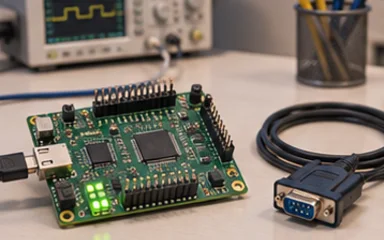
Work with a low-level I2C controller and examine what a driver needs to exchange data with a device.
See the detailed course outlineDescribe hardware in Device Tree and associate it with platform drivers.
See the detailed course outlineDevelop SPI driver interfaces and see how they connect to the Linux SPI framework.
See the detailed course outlineReview the I2C protocol and the controller registers for the target platform. Develop a controller driver that works independently of the Linux I2C framework, then extend transfers beyond a single byte. The exercises read and write an I2C EEPROM, connecting register level behaviour with an observable device transaction. This provides the low level implementation that will later be integrated with the device model and bus framework.
The source groups these days around platform devices, Device Tree and Linux I2C framework integration. Develop platform and dummy adapter or client drivers, examine registration and probing, and connect the low level implementation with the framework. Extend the work to interrupt handling, hardware FIFO use and deferred processing. The precise allocation between Day 2 and Day 3 is not specified in the supplied outline.
Review SPI and construct a character driver framework for a low level implementation. Examine the target controller registers and single byte transfer flow before developing a loopback driver. Extend the work through the Linux platform bus and Device Tree information. The day connects register access and data transfer with the mechanisms used to describe the hardware and bind its implementation into the Linux device model.
Explore SPI framework components, client and controller registration, probing and Device Tree descriptions. Begin with dummy client and controller drivers, then integrate the low level implementation and platform specific components developed earlier. Update the relevant Device Tree entries and test the resulting driver. The focus is on understanding the relationships between controller, client and platform descriptions during framework integration rather than treating each driver as an isolated module.
The source combines Days 2–3 in one block. That block is presented together; the individual daily allocation should be confirmed with Timmins.
Need the detailed syllabus? Request the course outline.
Check prerequisites and confirm the course fit with Timmins for your role, experience and selected delivery.
Equivalent workplace experience can satisfy starting knowledge; you do not need to purchase another Timmins course just because it covers these topics.
These outcomes describe the training scope, not extra admission requirements.
Tell Timmins which prerequisite you are unsure about and what you already do at work. Separately confirm software versions, installation steps, equipment, permissions and who supplies access. Do not assume equipment or licences are included.
This is self-review guidance, not a formal knowledge assessment. The enquiry draft includes your course; add your relevant experience and preparation questions.
Check the course outline for the software, development environment and any target hardware. Confirm installation steps, versions, equipment access and lab arrangements before joining.
Ask which preparation materials, follow-up resources or trainer support are included in your selected delivery.
Confirm the certificate, completion requirements and any assessed activities for your selected batch. A practical project does not by itself establish an assessed skills award.
Understand certificates and assessments →Confirm dates, venue, fees, available seats and delivery arrangements with Timmins before booking.
Ask Timmins about upcoming dates for this course.
View the public training calendar →Ask about another date or team delivery. Share your preferred timeframe, city or delivery mode and participant numbers. Timmins will discuss the options; dates, trainer availability, delivery and fees must be confirmed separately. Sending an enquiry does not reserve a place or confirm a class.
Your selected course is included in the draft. Review it and press Send in your messaging app.
Embedded Linux engineers developing platform-specific device drivers.
Knowledge of C, Linux and basic Linux driver development, such as a character driver. Familiarity with kernel programming constructs including mutexes, semaphores, wait queues and interrupt handling.
Check the outline and confirm the software environment, hardware, equipment access and setup requirements for your selected delivery. Do not assume all courses use the same board or lab environment.
The course topics describe the technical scope. Ask Timmins to confirm the labs, demonstrations and any assessed activities for your selected programme. Completion and assessed credentials have different requirements.
Discuss an in-house session with Timmins. Share the team’s roles, systems and intended outcomes so the scope, prerequisites, delivery and any adaptations can be agreed.
The hands-on driver exercises were easy to relate to the work, and the trainer helped participants resolve problems during the labs.
Engineer at MotorolaFeedback summary from the Timmins company website ↗.
For teams considering Linux Driver Development training in Malaysia, use the published learning outcomes and prerequisites on this page to check the fit before requesting a quotation.
Kernel and device-driver engineers can describe your hardware interface and Linux background when checking driver-course preparation. This is an enquiry example, not a promise to customise the course or solve a production issue.
The existing course page lists: Work with low-level I2C and SPI controller interfaces. Describe devices using platform drivers and Device Tree.
Knowledge of C, Linux and basic Linux driver development, such as a character driver. Familiarity with kernel programming constructs including mutexes, semaphores, wait queues and interrupt handling.
Describe your needs and prepare a message for Timmins. Nothing is sent or saved on this website. Review the draft and press Send in your email app or WhatsApp.