Introduction to Infrastructure as Code & Terraform
Explore Module 1: Introduction to Infrastructure as Code, Definition of IaC, and Benefits of IaC over traditional infrastructure management.
Explore the course learning plan Training & Capability DevelopmentLearn. Practise. Apply.⌕
Deploy and manage infrastructure with Terraform using declarative code.
By the end of the course, participants will be able to provision, manage, and automate infrastructure on cloud platforms and on-premise environments.
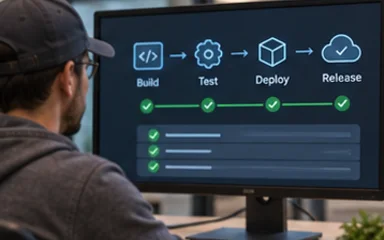
Explore Module 1: Introduction to Infrastructure as Code, Definition of IaC, and Benefits of IaC over traditional infrastructure management.
Explore the course learning planExplore Module 4: Terraform state management & modules, Terraform state and its importance, and Remote state and backend configuration.
Explore the course learning planExplore Module 7: Terraform and Ansible integration, using Terraform to provision infrastructure, and Integrating Ansible to configure infrastructure post-provisioning.
Explore the course learning planExplore Module 1: Introduction to Infrastructure as Code, Definition of IaC, and Benefits of IaC over traditional infrastructure management. The discussion covers Key concepts: idempotency, version control, automation, terraform, Ansible, and other IaC tools, and Module 2: getting started with Terraform. The section also examines Terraform architecture and components, providers and resources, and Writing basic Terraform configurations.
Explore Module 4: Terraform state management & modules, Terraform state and its importance, and Remote state and backend configuration. The discussion covers using modules to organize and reuse configurations, hands-on: organizing Terraform code into modules and using remote state, and Module 5: introduction to Ansible and configuration management. The section also examines Ansible architecture and components.
Explore Module 7: Terraform and Ansible integration, using Terraform to provision infrastructure, and Integrating Ansible to configure infrastructure post-provisioning. The discussion covers hands-on: Provisioning with Terraform and configuring with Ansible, Module 8: advanced Ansible concepts, and Ansible vault for secrets management. The section also examines hands-on: Working with dynamic inventories and encrypted secrets and Module 9: infrastructure automation best practices.
Need the detailed syllabus? Request the course outline.
Check the course fit for your role and experience. Confirm the prerequisites, delivery scope and preparation before booking.
Check the full outline for this course’s tools and technologies. Confirm software versions, licences, accounts, equipment, access and installation requirements before joining.
Ask which preparation materials, follow-up resources or trainer support are included in your selected delivery.
Confirm the certificate, completion requirements and any assessed activities for your selected batch. A practical project does not by itself establish an assessed skills award.
Understand certificates and assessments →Confirm dates, venue, fees, available seats and delivery arrangements with Timmins before booking.
Ask Timmins about upcoming dates for this course.
View the public training calendar →Ask about another date or team delivery. Share your preferred timeframe, city or delivery mode and participant numbers. Timmins will discuss the options; dates, trainer availability, delivery and fees must be confirmed separately. Sending an enquiry does not reserve a place or confirm a class.
Your selected course is included in the draft. Review it and press Send in your messaging app.
DevOps Engineers, System Administrators, and Cloud Engineers.
Basic understanding of cloud services (AWS, Azure, GCP, etc.). Familiarity with basic Linux commands and system administration. Basic knowledge of virtualization and networking.
Check the full outline for this course’s tools and technologies. Confirm software versions, licences, accounts, equipment, access and installation requirements before joining.
The learning plan describes the course topics and activities in the published summary. Ask Timmins to confirm the exercises, trainer feedback and any assessed activities for your selected delivery. Completion and assessed credentials have different requirements.
AI-assisted activities are not listed in this course summary. Ask Timmins to confirm the scope of your selected delivery rather than assuming AI tools are included.
Discuss an in-house programme with Timmins. Share the team’s roles, starting knowledge and workplace challenges. Agree any adaptations, assessment and follow-up support in the proposal.