Board startup and U-Boot
Trace the first boot stage and examine which parts of U-Boot depend on the target board.
See the detailed course outline Training & Capability DevelopmentLearn. Practise. Apply.⌕
Trace first-stage boot and identify board-specific code.
Adapt the bootloader, Linux kernel and Device Tree for target hardware. Follow the board bring-up work from the first boot stage through platform driver integration.
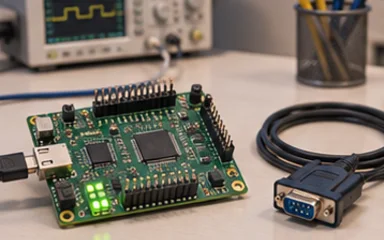
Trace the first boot stage and examine which parts of U-Boot depend on the target board.
See the detailed course outlineIdentify board-specific code and configuration changes needed to port U-Boot and integrate platform support.
See the detailed course outlineAdapt hardware descriptions and platform driver support for the Linux kernel. Examine the configuration choices that affect boot time.
See the detailed course outlineTrace hardware initialisation from reset through the first stage bootloader, examining the placement of board support code. Write low level code to control an LED and relate it to the startup sequence. Continue into U-Boot internals, environment storage and support for multiple boot options. The day connects bootloader code flow with the hardware specific work needed when adapting an embedded Linux platform.
Examine the steps required to add support for a new board in U-Boot and practise adding a custom command. Introduce platform devices and platform drivers, their registration and binding, and the transfer of device information to a driver. Practical work develops a simple platform driver and extends it to control onboard LEDs, connecting bootloader adaptation with the Linux model for representing nonenumerable hardware.
Trace Linux kernel code flow and the location of board support information before modifying Device Tree data for a custom platform. Extend the platform driver so it uses that description rather than relying only on embedded device information. Examine boot time measurement, profiling and the kernel boot graph. The outlined optimisation work relates startup evidence to changes in bootloader and kernel behaviour.
Need the detailed syllabus? Request the course outline.
Check prerequisites and confirm the course fit with Timmins for your role, experience and selected delivery.
Check the course outline for the software, development environment and any target hardware. Confirm installation steps, versions, equipment access and lab arrangements before joining.
Ask which preparation materials, follow-up resources or trainer support are included in your selected delivery.
Confirm the certificate, completion requirements and any assessed activities for your selected batch. A practical project does not by itself establish an assessed skills award.
Understand certificates and assessments →Confirm dates, venue, fees, available seats and delivery arrangements with Timmins before booking.
Ask Timmins about upcoming dates for this course.
View the public training calendar →Ask about another date or team delivery. Share your preferred timeframe, city or delivery mode and participant numbers. Timmins will discuss the options; dates, trainer availability, delivery and fees must be confirmed separately. Sending an enquiry does not reserve a place or confirm a class.
Your selected course is included in the draft. Review it and press Send in your messaging app.
Firmware, BSP and embedded Linux engineers bringing up or adapting a custom board.
Embedded Linux System – Build, Boot & Recover or equivalent knowledge of boot flow, bootloader configuration, kernel builds and the root filesystem.
Check the outline and confirm the software environment, hardware, equipment access and setup requirements for your selected delivery. Do not assume all courses use the same board or lab environment.
The course topics describe the technical scope. Ask Timmins to confirm the labs, demonstrations and any assessed activities for your selected programme. Completion and assessed credentials have different requirements.
Discuss an in-house session with Timmins. Share the team’s roles, systems and intended outcomes so the scope, prerequisites, delivery and any adaptations can be agreed.
For teams considering Embedded Linux BSP and Porting training in Malaysia, use the published learning outcomes and prerequisites on this page to check the fit before requesting a quotation.
BSP and platform engineers can share the target-board context and existing porting experience so course fit can be reviewed. This is an enquiry example, not a promise to customise the course or solve a production issue.
The existing course page lists: Trace first-stage boot and identify board-specific code. Identify changes needed to port U-Boot to a new board.
Embedded Linux System – Build, Boot & Recover or equivalent knowledge of boot flow, bootloader configuration, kernel builds and the root filesystem.
Describe your needs and prepare a message for Timmins. Nothing is sent or saved on this website. Review the draft and press Send in your email app or WhatsApp.