Clean C code and structural discipline
Review what makes procedural C code easy to understand, change and test.
Explore the course learning plan Training & Capability DevelopmentLearn. Practise. Apply.⌕
Apply clean code principles specifically tailored to procedural C systems.
Clean Coding in C is an intensive, hands-on program designed to elevate procedural C development into a disciplined, maintainable, and production-grade engineering practice.
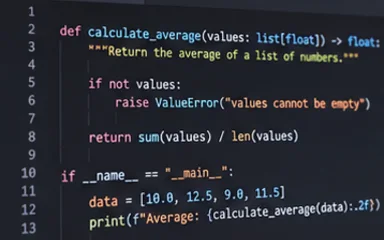
Review what makes procedural C code easy to understand, change and test.
Explore the course learning planExamine ownership and allocation decisions in C and how they affect correctness when code handles resources.
Explore the course learning planWork through how to refactor an existing C codebase in manageable steps.
Explore the course learning planReview what makes procedural C code easy to understand, change and test. Examine the naming of functions and variables, how files are organised, and where header responsibilities belong. Work through structural changes that make control flow simpler and reveal what each part of the program is meant to do. Connect the language features to the problem the code is intended to solve, tracing how inputs, program structure and execution produce the resulting behaviour.
Examine ownership and allocation decisions in C and how they affect correctness when code handles resources. Review stack and heap choices, pointer scope and the relationship between allocating and releasing memory. Consider how clear error paths and ownership conventions help a team prevent leaks and diagnose failures. Trace how the language construct affects execution and data handling, relating the example to code that another developer can read, reason about and maintain.
Work through how to refactor an existing C codebase in manageable steps. Apply earlier guidance on structure and ownership, and review how documentation and dependency choices affect maintenance. Discuss which coding standards can help a team keep new changes readable while continuing to work with legacy code. Connect the leadership approach to the task and the team’s needs, making responsibilities, expected behaviour and follow-through clear rather than relying on a general intention.
Need the detailed syllabus? Request the course outline.
Check the course fit for your role and experience. Confirm the prerequisites, delivery scope and preparation before booking.
Check the full outline for this course’s tools and technologies. Confirm software versions, licences, accounts, equipment, access and installation requirements before joining.
Ask which preparation materials, follow-up resources or trainer support are included in your selected delivery.
Confirm the certificate, completion requirements and any assessed activities for your selected batch. A practical project does not by itself establish an assessed skills award.
Understand certificates and assessments →Confirm dates, venue, fees, available seats and delivery arrangements with Timmins before booking.
Ask Timmins about upcoming dates for this course.
View the public training calendar →Ask about another date or team delivery. Share your preferred timeframe, city or delivery mode and participant numbers. Timmins will discuss the options; dates, trainer availability, delivery and fees must be confirmed separately. Sending an enquiry does not reserve a place or confirm a class.
Your selected course is included in the draft. Review it and press Send in your messaging app.
Embedded C Developers, Firmware Engineers, and System Software Engineers.
Working knowledge of C programming (functions, pointers, memory allocation). Familiarity with compiling and debugging C programs. Basic understanding of data structures in C.
Check the full outline for this course’s tools and technologies. Confirm software versions, licences, accounts, equipment, access and installation requirements before joining.
The learning plan describes the course topics and activities in the published summary. Ask Timmins to confirm the exercises, trainer feedback and any assessed activities for your selected delivery. Completion and assessed credentials have different requirements.
AI-assisted activities are not listed in this course summary. Ask Timmins to confirm the scope of your selected delivery rather than assuming AI tools are included.
Discuss an in-house programme with Timmins. Share the team’s roles, starting knowledge and workplace challenges. Agree any adaptations, assessment and follow-up support in the proposal.