5G Introduction
Explore the role of 5G, 5G radio access architecture and interfaces, and Evolution of 3GPP Technologies.
Explore the course learning plan Training & Capability DevelopmentLearn. Practise. Apply.⌕
Understand the basics of 5G NR, including its architecture and high-level requirements.
The course covers the foundational aspects of 5G NR, including its architecture, physical layer, radio interface protocols, and key features such as massive MIMO and network slicing.
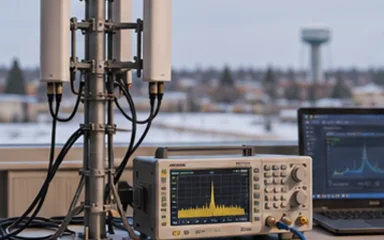
Explore the role of 5G, 5G radio access architecture and interfaces, and Evolution of 3GPP Technologies.
Explore the course learning planExplore 5G RRC Sublayer, UE states and state transitions, and 5G initial access with minimum latency.
Explore the course learning planExplore Cloud RAN, the role of C-RAN, and Advantages and Challenges of C-RAN.
Explore the course learning planExplore the role of 5G, 5G radio access architecture and interfaces, and Evolution of 3GPP Technologies. The discussion covers Cellular networks and the internet of things, IoT, NFV, SDN, and M2M Communications, and 5G Drivers: application and Use cases. The section also examines 5G High-Level requirements, 5G technologies and spectrum overview, and New RAN based on gNB.
Explore 5G physical layer aspects, 5G radio interface protocol aspects, and Radio interface protocol architecture (CP and UP). The discussion covers Probable radio frame structures, DL/UL modulation and physical layer channel, and DL/UL performance evaluation of multiple access. The section also examines 5G PHY Technologies: coding schemes and dynamic TDD and DL/UL performance evaluation related to MIMO.
Explore 5G RRC Sublayer, UE states and state transitions, and 5G initial access with minimum latency. The discussion covers Random access procedure with minimum latency, 5G Key performance indicators definitions, and Handover interruption time. Relate the network components and configuration choices to the service requirements, distinguishing the role of each layer when explaining a deployment decision.
Explore 5G radio access network procedures, Dual connectivity between NR and LTE, and 5G Key features. The discussion covers intra-System mobility (UE-Based and Network-Controlled), PDU session management, and Initial UE Access. The section also examines 5G QoS architecture in NR and NextGen core, QoS Impact on Handovers, and Licensed assisted access (LAA).
Explore Cloud RAN, the role of C-RAN, and Advantages and Challenges of C-RAN. The discussion covers Network slicing, 5G Supplementary-Services, and Resource management. Connect the foundational ideas to the examples in the section, distinguishing the responsibility of each component before considering how they work together in a system. Explain how these topics fit together and which assumptions need to be made explicit when applying them in a workplace setting.
Need the detailed syllabus? Request the course outline.
Check the course fit for your role and experience. Confirm the prerequisites, delivery scope and preparation before booking.
Check the full outline for this course’s tools and technologies. Confirm software versions, licences, accounts, equipment, access and installation requirements before joining.
Ask which preparation materials, follow-up resources or trainer support are included in your selected delivery.
Confirm the certificate, completion requirements and any assessed activities for your selected batch. A practical project does not by itself establish an assessed skills award.
Understand certificates and assessments →Confirm dates, venue, fees, available seats and delivery arrangements with Timmins before booking.
Ask Timmins about upcoming dates for this course.
View the public training calendar →Ask about another date or team delivery. Share your preferred timeframe, city or delivery mode and participant numbers. Timmins will discuss the options; dates, trainer availability, delivery and fees must be confirmed separately. Sending an enquiry does not reserve a place or confirm a class.
Your selected course is included in the draft. Review it and press Send in your messaging app.
Telecom Engineers, Network Managers, and RF Engineers.
General knowledge of mobile communication networks, specifically their Air Interface.
Check the full outline for this course’s tools and technologies. Confirm software versions, licences, accounts, equipment, access and installation requirements before joining.
The learning plan describes the course topics and activities in the published summary. Ask Timmins to confirm the exercises, trainer feedback and any assessed activities for your selected delivery. Completion and assessed credentials have different requirements.
AI-assisted activities are not listed in this course summary. Ask Timmins to confirm the scope of your selected delivery rather than assuming AI tools are included.
Discuss an in-house programme with Timmins. Share the team’s roles, starting knowledge and workplace challenges. Agree any adaptations, assessment and follow-up support in the proposal.