5G requirements, spectrum and air interface
Examine the service requirements behind 5G and how they influence spectrum and bandwidth choices.
Explore the course learning plan Training & Capability DevelopmentLearn. Practise. Apply.⌕
Specify the motivation for network planning and design for 5G networks.
5G Network planning, design and optimization refers to the activities, methods, procedures, and tools that pertain to the Planning and Optimization of 5G NR networked systems.
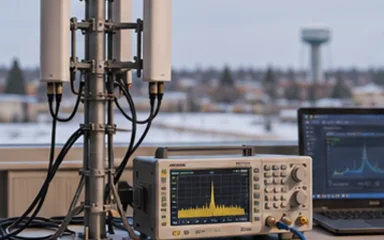
Examine the service requirements behind 5G and how they influence spectrum and bandwidth choices.
Explore the course learning planCalculate physical layer overhead and examine the parameters and margins used in a 5G NR link budget.
Explore the course learning planApply the planning concepts to case studies and work through practical questions as a group.
Explore the course learning planExamine the service requirements behind 5G and how they influence spectrum and bandwidth choices. Review the purpose of a flexible air interface and how deployment conditions shape radio planning. Relate the component structure and interactions to the task a user needs to complete, tracing how input and state affect what the application displays.
Review the physical layer for uplink and downlink, including modulation, channels and coding. Compare duplexing modes and consider how they affect the way a radio network uses available spectrum. Relate the network components and configuration choices to the service requirements, distinguishing the role of each layer when explaining a deployment decision.
Calculate physical layer overhead and examine the parameters and margins used in a 5G NR link budget. Relate these calculations to cell range and capacity, including comparisons with LTE. Relate the network components and configuration choices to the service requirements, distinguishing the role of each layer when explaining a deployment decision.
Explore the channel configuration choices that inform initial radio planning. Review the role of physical random access channel settings and physical cell identifiers in preparing a 5G deployment. Relate the network components and configuration choices to the service requirements, distinguishing the role of each layer when explaining a deployment decision.
Apply the planning concepts to case studies and work through practical questions as a group. Review how spectrum, coverage, capacity and radio parameters affect decisions in the scenarios. Relate the network components and configuration choices to the service requirements, distinguishing the role of each layer when explaining a deployment decision.
Need the detailed syllabus? Request the course outline.
Check the course fit for your role and experience. Confirm the prerequisites, delivery scope and preparation before booking.
Check the full outline for this course’s tools and technologies. Confirm software versions, licences, accounts, equipment, access and installation requirements before joining.
Ask which preparation materials, follow-up resources or trainer support are included in your selected delivery.
Confirm the certificate, completion requirements and any assessed activities for your selected batch. A practical project does not by itself establish an assessed skills award.
Understand certificates and assessments →Confirm dates, venue, fees, available seats and delivery arrangements with Timmins before booking.
Ask Timmins about upcoming dates for this course.
View the public training calendar →Ask about another date or team delivery. Share your preferred timeframe, city or delivery mode and participant numbers. Timmins will discuss the options; dates, trainer availability, delivery and fees must be confirmed separately. Sending an enquiry does not reserve a place or confirm a class.
Your selected course is included in the draft. Review it and press Send in your messaging app.
Share your role, experience and intended workplace application with Timmins to confirm whether this course is suitable.
Basic understanding of telecom, 3G, 4G LTE technology. Basic understanding of LTE Air Interface. Basic understanding of radio network planning.
Check the full outline for this course’s tools and technologies. Confirm software versions, licences, accounts, equipment, access and installation requirements before joining.
The learning plan describes the course topics and activities in the published summary. Ask Timmins to confirm the exercises, trainer feedback and any assessed activities for your selected delivery. Completion and assessed credentials have different requirements.
AI-assisted activities are not listed in this course summary. Ask Timmins to confirm the scope of your selected delivery rather than assuming AI tools are included.
Discuss an in-house programme with Timmins. Share the team’s roles, starting knowledge and workplace challenges. Agree any adaptations, assessment and follow-up support in the proposal.